

Arinan Dourado, PhD
Tagline:AI Assurance and Trustworthy AI researcher helping organizations evaluate, validate, and responsibly deploy AI-enabled systems.
Louisville, KY, USA
Engineering Trust into AI-Enabled Systems
I develop practical methods for determining whether AI systems are not only accurate but also robust, explainable, reproducible, and consistent with governing physical or domain principles. My work supports model evaluation, risk identification, validation, human oversight, and responsible deployment in engineering, healthcare, autonomous systems, and other high-consequence environments.
As an Assistant Professor, AI/ML researcher, and ABET accreditation leader, I combine technical research with quality-system assessment, multidisciplinary leadership, and clear communication of complex evidence. I am interested in AI assurance, model validation, governance, advisory, and research-leadership opportunities.
Accomplishments Summary
Two PhD Degrees
NSF-Funded Research
700+ Research Citations
AI Applications Across Engineering, Healthcare, and Education
Six-Year ABET Review Cycle with No Findings
Expertise and Research Focus
- AI Assurance and Validation: Developing evidence-based methods to assess the reliability of AI systems for their intended operating environments
- Engineering Trustworthiness: Evaluating and testing complementary dimensions of AI trustworthiness
- Model Risk and Performance Assessment: Identifying failure modes and the system’s limitations before and after deployment
- Explainability and Explanation Assurance: Assessing AI explanations' reproducibility and usefulness to technical experts and decision-makers
- Domain-Informed AI: Incorporating governing principles and domain knowledge into system development, testing, and validation
- Assurance for High-Consequence Applications: Applying trustworthy-AI methods in healthcare and other decision-critical settings
How I Can Contribute to Your Project
- Develop AI validation and acceptance criteria
- Review models for robustness, uncertainty, and limitations
- Evaluate the reliability of AI-generated explanations
- Translate technical findings into governance-ready evidence
- Coordinate multidisciplinary assurance and validation programs
- Train teams in trustworthy-AI evaluation practices
Projects
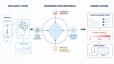
Trustworthy AI for Neuro-Oncology Decision Support
date: 2024Organization:Department of Neurological Surgery, School of Medicine, UofL
Description:This project develops trustworthy and explainable machine-learning methods to support the preoperative characterization of meningiomas and prediction of postoperative outcomes. The research integrates clinical, radiographic, laboratory, demographic, and disease-specific information to produce patient-level predictions accompanied by uncertainty estimates and interpretable explanations. The broader objective is to help clinicians understand not only what a model predicts, but why the prediction was produced, when it should be trusted, and how alternative patient conditions could affect the result.
Engineering Trustworthiness and the TRUST Research Initiative
date: 2024Organization:Department of Mechanical Engineering, UofL
Description:The TRUST (Trustworthy, Resilient, Uncertainty-Aware Systems and Technologies) Research Initiative focuses on how trust can be engineered into intelligent systems. This research effort aims to develop a multidimensional framework for evaluating AI through predictive robustness, domain consistency, operational familiarity, and reproducibility. The objective is to produce actionable assurance evidence for high-consequence AI-enabled systems.
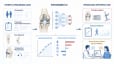
Explainable AI for Personalized Orthopedic Care
date: 2023Organization:Department of Orthopedic Surgery, School of Medicine, UofL
Description:This research applies explainable machine learning to personalized decision-making in total knee arthroplasty. Current studies investigate procedure selection, postoperative outcomes, and the identification of patients likely to achieve high patient-reported outcome scores. By integrating demographic characteristics, preoperative outcomes, intraoperative alignment measurements, and follow-up data, the project seeks to produce reliable predictions with patient-specific explanations that can support clinical judgment and shared decision-making.
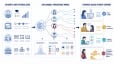
Explainable Machine Learning for Engineering Student Persistence
date: 2022Organization:UofL, NSF-supported engineering-education research
Description:This project investigates how explainable machine learning can help universities better understand and support student persistence in engineering. Neural networks, random forests, and Bayesian learning methods are used to identify patterns associated with continued enrollment and degree progression, while explanation methods examine which institutional, academic, and potentially malleable factors influence individual predictions. The goal is to develop responsible educational analytics that inform timely, evidence-based mentoring and student support without treating predictions as deterministic judgments.

Selected Publications
Machine Learning Model for Selection of Cementless Total Knee Arthroplasty Candidates Utilizing Patient and Radiographic Parameters
Journal ArticlePublisher:Journal of Orthopaedic ResearchDate:2025Authors:Duncan Anna E.Arthur L. MalkaniStoltz Michael J.Ahmed NabidMullick MaunilWhitaker John E.Swiergosz AndrewSmith Langan S.Dourado ArinanComparing SHAP and LIME Explanation Methods for Engineering Persistence ML Predictions
Conference PaperPublisher:2025 IEEE Frontiers in Education Conference (FIE)Date:2025Authors:Xiaomei WangAlvin TranChristian Zuniga-NavarreteArinan DouradoLuis Javier SeguraCampbell R BegoPredicting WHO Grade in Meningioma Surgery: Development of an Unbiased Variable Selection and Validation Approach Using Preoperative Clinical and Radiographic Data
Journal ArticlePublisher:Journal of Neurological Surgery Part B: Skull BaseDate:2025Authors:Philip OstrovRaja N JaniMaunil MullickNiraj RamaAmrit AvulaArshi ChopraArinan DouradoIsaac AbecassisAkshitkumar MistryBrian J WilliamsKriging-based surrogate controller for robust control of a flexible rotor supported by active magnetic bearings
Journal ArticlePublisher:Journal of Engineering for Gas Turbines and PowerDate:2023Authors:Marcus VF De OliveiraLeonardo C SicchieriArinan De Piemonte DouradoAldemir Ap Cavallini JrValder Steffen JrEnsemble of hybrid neural networks to compensate for epistemic uncertainties: a case study in system prognosis
Journal ArticlePublisher:Soft ComputingDate:2022Authors:Arinan DouradoFelipe VianaPhysics-informed neural networks for missing physics estimation in cumulative damage models: a case study in corrosion fatigue
Journal ArticlePublisher:Journal of Computing and Information Science in EngineeringDate:2020Authors:Arinan DouradoFelipe AC Viana